

How Investing in the Right Equipment Improves Commercial Painting Projects

On complex sites, outcomes are determined as much by preparation and tools as they are by skill and experience. In commercial painting, these aren’t a bonus or an afterthought. They influence how a project is planned, controlled and delivered, and those decisions are made well before work begins. Investing in the right equipment and technology sets the standard for how smoothly things run.
At Dukes, we’ve been a trusted commercial painter in Sydney since 1958, providing tailored, high-quality solutions for strata, retirement living and aged care, commercial property, education, government and heritage assets. Because we operate daily in live, high-risk environments where conditions can change quickly, having in-house access systems and reliable supporting technologies allows us to maintain quality, safety and client satisfaction.
“On complex sites, outcomes are determined as much by preparation and tools as they are by skill and experience.”
Equipment decisions start way before the work commences
Technology supports the project from the earliest stage. During estimating, we use project and estimating systems to capture scope, sequencing assumptions, and programme considerations. This information then flows into our project management platform, which supports safety documentation, defect tracking, compliance records, and building repair history throughout delivery. Maintaining the same information environment from estimating through to project management and site delivery ensures continuity, preserves technical detail, and reduces the risk of information loss during the handover from office to site.
Access planning is also part of the estimation process. At Dukes, we’re able to plan around equipment that we own and control, without relying on assumptions about availability. Over the years, we’ve invested in scaffolding, EWPs, rope access systems and specialist height-access equipment specific to commercial painting needs. As a result, we can offer more realistic strategies and better staging decisions, and we’re impacted by far fewer last-minute changes because third parties aren’t redesigning access mid-project.
This ownership also helps reduce cost, as access equipment is one of the largest expenses and risk drivers in commercial painting. It gives us full visibility from the estimation phase, with no exposure to escalating hire rates and fewer surprises, allowing for clearer pricing from day one.
Our systems are centralised as a single source of truth, rather than fragmented spreadsheets or emails. This allows accurate progress reporting, clear recording of issues and approvals, better control of variations or scope changes, and minimises misunderstandings between us, our clients and consultants.
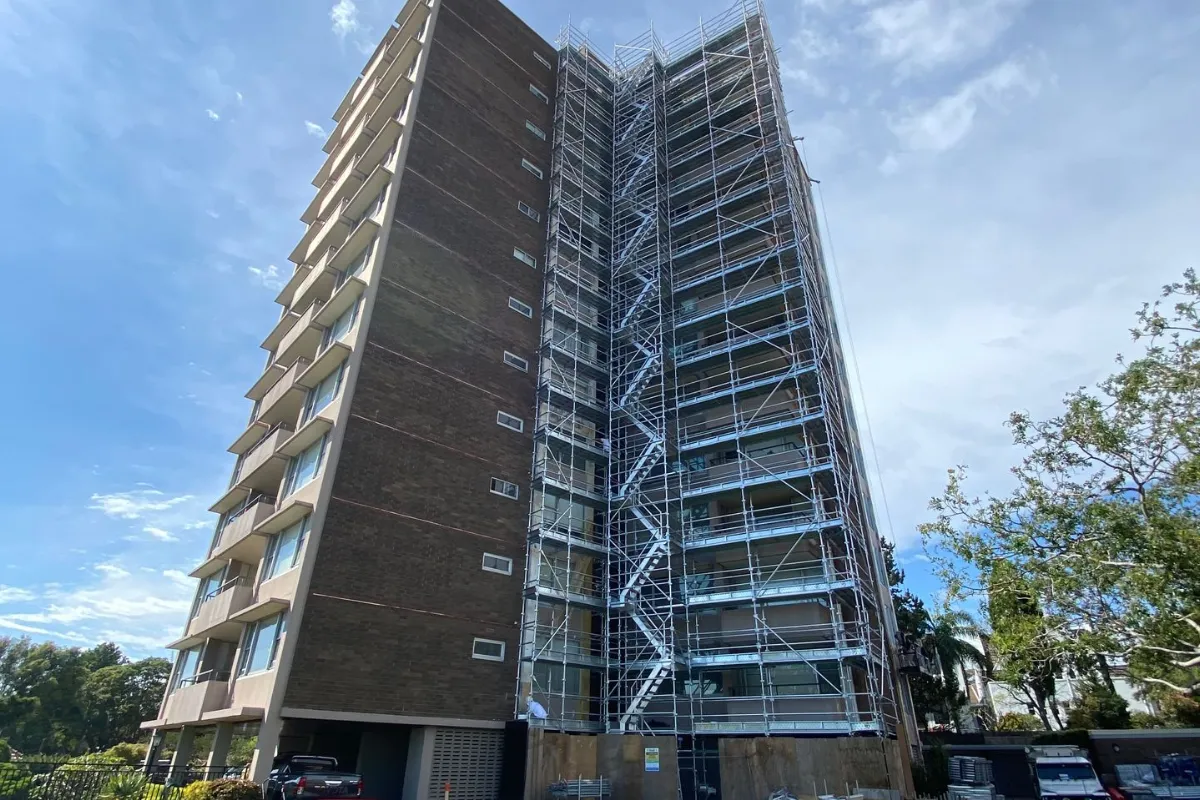
When plans change mid-project
During a remedial and protective coatings project on a 13-storey residential tower in Edgecliff, the consultant flagged additional issues once work was underway, including non-compliant windows and balustrades that needed to be removed and replaced. This was unexpected and added to the scope. For other commercial painters, a change like this can trigger delays, redesigns and urgent third-party hire.
Because Dukes already had extensive scaffolding on site and access equipment available, we could accommodate the change without interrupting the program. There was no need to engage external scaffolders or rework access arrangements mid-project. As a result, the expanded scope was delivered faster, at a lower cost and with minimal disruption to residents, bringing the building into compliance without the usual stress of late-stage changes.
“Investing in the right equipment and technology sets the standard for how smoothly things run.”
Consistency and workmanship
Hire deadlines can create an artificial sense of urgency that impacts the level of care taken on site. Removing that pressure allows our trades to complete preparation and finishes properly, and to the highest standard, every time. When works are lengthy and staged across multiple phases, being able to maintain that level of consistency is crucial.
Our team uses the same access systems repeatedly, and that familiarity improves safety, efficiency of movement, confidence in positioning and accuracy in preparation and application. There’s less variability between crews and projects, and far less time spent adapting to new equipment. And it doesn’t matter which sector we’re working in, whether it’s a multi-storey strata building, a retirement village, a primary school or a heritage-listed government asset. Setup is predictable, workflows are standardised, and the quality of the outcome is always the same.
Stable access plans support proper preparation and execution, as there’s no need to compromise prep due to time or access constraints. This matters because preparation quality directly affects coating performance and finish. There’s also less risk of damage due to the correct selection of equipment. Fewer mistakes mean less rework and a cleaner presentation at final handover.Speaking of the finish, having the right equipment and technology supports better outcomes because the work isn’t rushed, allowing for proper drying times, correct film build and, most importantly, attention to detail.
“Because we operate daily in live, high-risk environments where conditions can change quickly, having in-house access systems and reliable supporting technologies allows us to maintain quality, safety and client satisfaction.”
Technology and smarter decision-making
Technology is the operational backbone of a well-managed contractor. That’s why it’s central to our work at Dukes. As mentioned, it’s not just something that supports what happens on site; it also plays a key role behind the scenes. We use it to communicate clearly with clients and consultants and to keep records centralised. This means decisions are easier to make and, just as importantly, properly documented.
We use real-time reporting tools on-site, including QR-code-based access for teams and stakeholders to view essential details. This supports faster, more informed decisions when conditions change and reduces delays that would otherwise be caused by waiting on information or approvals.
You might think of operational systems and technology as purely administrative, but in practice, they help us navigate complexity across sites and sectors, maintain clarity and apply the same standards to planning, communication and execution.
Talk to the experts in commercial painting and remediation
Beyond planning and delivery, owning our own access equipment gives us full control over servicing schedules, inspection records and compliance. Equipment is maintained to a consistent standard across all sites, rather than varying by hire provider, which adds another layer of safety, certainty and reliability.
At Dukes, we’re more than just commercial painters. We’re licensed builders who provide complete solutions, including remedial building repair, flooring and lead paint abatement, all supported by our own specialist access equipment. We’ve invested in having the right equipment and technology in place, and we’ll continue to do so as our work evolves.
To learn more or request a quote, contact our team today.
By Paul Williams
General Manager
Key takeaways

Shaping project success from the start
Equipment choice affects planning, control and delivery long before painting begins. They influence safety, sequencing, cost and risk management in commercial painting projects.
Reducing risk and cost uncertainty
Having in-house access systems like scaffolding, EWPs and rope systems means fewer delays, no dependency on third-party hires and clearer pricing, even when plans change mid-project.
Consistency boosts quality and safety
Repeated use of familiar equipment and integrated technology enhances safety, workflow predictability and workmanship quality, reducing mistakes and rework.
Improving collaboration and decision-making
Centralised digital tools (e.g., project management software and real-time reporting with QR systems) strengthen communication, documentation and responsiveness.
Frequent Asked Questions
Why is investing in the right commercial painting equipment important?
Having the right equipment significantly improves planning, control, safety and quality in commercial painting projects. It ensures smoother delivery, reduces risk, and helps maintain consistent workmanship standards.
How does equipment ownership benefit project planning and delivery?
Owning specialist access and painting equipment allows for accurate planning early in the estimating phase, minimises reliance on third-party hire, reduces unexpected cost escalation, and supports clearer pricing from the outset.
What role does technology play in commercial painting projects?
Technology supports project management, safety documentation, defect tracking and centralised communication. Real-time reporting tools help teams make faster, informed decisions and keep records fully documented throughout a project.
How does having in-house access systems improve outcomes when plans change?
When unexpected issues arise during delivery, having in-house scaffolding and access equipment allows teams to adapt quickly without interrupting schedules or incurring delays and additional costs associated with hiring external providers.
What impact does the right equipment have on consistency and workmanship?
Consistent use of familiar access systems reduces variability between crews and projects. This familiarity supports safer, more efficient workflows, better preparation and finishing quality, and less rework due to incorrect equipment or rushed execution.
Recent projects


Recent projects


© Copyright Dukes Painting Services Pty Ltd. Website by Brilliant Digital