Acacia, Breakfast Point

Strata refurbishment and painting

Project Value: Approx $400K
Duration: Part A (interior & front entry works): ~12 weeks
Part B (external, basement & rear entry works): ~16 weeks
Status: Complete

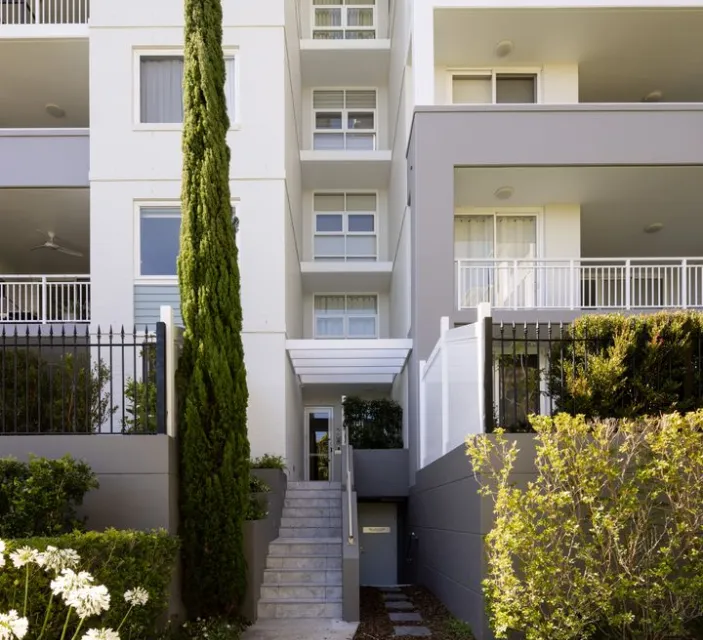
Acacia Apartments is a five-level, 50-lot residential strata building in the sought-after Sydney precinct of Breakfast Point. We completed extensive internal and external works using a two-stage approach that went well beyond repainting and combined multiple trades under a single, well-coordinated delivery program.

Project Overview

The full project scope included the painting of external façades, balconies, slab edges, soffits and eaves, basement and service areas, as well as all internal common spaces such as foyers, corridors, doors, frames and joinery. Refurbishment works included new carpeting, a full lighting upgrade, paving and waterproofing to entry areas, render and crack repairs, joint replacement, and joinery and wainscoting upgrades.

Acacia was looking for a full strata transformation rather than a surface-level repaint. The brief was about lifting the building to a contemporary standard that felt right for the area, while also making sure the coatings and finishes would perform over the long term. A consistent approach to colours, materials and workmanship was essential.

We staged the work across two major phases to minimise disruption and keep resident access and amenities available, particularly for elderly residents. Doing so required careful coordination across multiple trades.

Access Methods

We used rope access extensively for façades and hard-to-reach areas, with scaffold towers and mobile equipment used where needed. Permanent surface-mounted anchor points were installed to allow safe access and make future maintenance easier. Access was staged so residents could continue moving through the building safely while works were in progress.

Challenges

Working in live environments necessitates high-level planning and sensitivity. With a number of elderly residents, clear communication and predictable sequencing were especially important.

The sheer scope of work was complex in itself as it combined major refurbishment and remedial works across multiple trades over an extended program. External geometry and building height added further complexity, requiring abseil access and detailed safety planning.

Additionally, the expectations for finish quality were understandably high.

“Managing access, safety and quality across a staged, multi-trade program takes more than good scheduling. It takes trust and clear communication at every step.”

Project Sentiment

Owners described the outcome as a genuine transformation of the building, not just routine maintenance. There was clear appreciation for how the works were managed on an occupied site, with multiple trades coordinated smoothly and standards kept high. This video testimonial highlights the key features and client satisfaction with the end result.
Communication

We engaged Paint Assist as the owners’ representative and superintendent to manage contract administration and scope control throughout the project. A dedicated Dukes Project Manager oversaw daily site operations, supported by regular coordination meetings between Dukes, Paint Assist, the building manager and key stakeholders. Structured reporting, inspections and staged sign-offs ensured transparency and alignment at every milestone.

Coating Systems & Materials

All coating systems were selected to meet the project specification and deliver long-term durability across a mix of internal and external substrates.

Specification
Dulux DuSpec Project ID 53363 was followed in full.
Primary external systems
Dulux AcraTex AcraShield Advance for high-build elastomeric protection to rendered and masonry façades.
Dulux AcraTex 968 AcraSkin Low Gloss to slab edges, parapets and columns requiring enhanced durability.
Dulux Weathershield Low Sheen to CFC cladding, soffits and timber elements.
Internal systems
Dulux Wash and Wear to walls.
Dulux Aquanamel to doors, frames and joinery.
Colour design
Developed by Lick Light and Colour.
Key tones included Coalition, White on White, Colorbond Surfmist, Stepney and Colorbond Wallaby.
System performance
Designed to deliver longevity, flexibility and consistency across mixed substrates.
Well-suited to high-traffic common areas and exposed external conditions.

Outcome

Dukes delivered a significant visual uplift across the entire complex, including improvements in the durability and long-term performance of coatings. Residents were able to live normally while work was in progress, and they now have a modern building that suits the premium location.

Project Gallery

Frequent Asked Questions

What does “strata painting” usually include beyond just repainting walls?

Strata painting in larger buildings often includes full common-property repainting plus surface preparation and repairs across multiple areas, not just a cosmetic refresh.

In this project, the strata painting scope included external façades, balconies, slab edges, soffits/eaves, basements/service areas, plus internal foyers, corridors, doors, frames and joinery.

It also went further into refurbishment/remedial scope like render and crack repairs, joint replacement, waterproofing to entry areas, and upgrades to finishes.

How do strata painting projects reduce disruption for residents (especially elderly occupants)?

The best strata painting outcomes happen when the contractor delivers staged works + predictable sequencing + clear communication, especially in “live” buildings where residents still need access.

In this project, we staged the work across two major phases to minimise disruption and maintain resident access and amenities, with specific consideration for elderly residents.

Working in live environments requires high-level planning and sensitivity, so communication was especially important.

Why do strata buildings use different coating systems on different surfaces (instead of one paint for everything)?

Because strata buildings have mixed substrates (render, masonry, cladding, timber, joinery, metal, internal plaster, high-traffic zones) and each surface needs a coating system designed for durability, flexibility, and exposure conditions.

In this project, the Dukes team used a full specification system (Dulux DuSpec Project ID 53363) and applied different products depending on the surface type and performance needs.

What access methods were used to paint the external façades at Acacia Apartments?

We used a combination of rope access (abseiling) and mobile/scaffold access, depending on the building zone and reach requirements.

We also installed permanent surface-mounted anchor points to improve safety and make future maintenance easier, while staging access to keep residents moving through the site safely.

How long did the Acacia, Breakfast Point strata painting and refurbishment take?

The project was delivered in two stages:

  • Part A (interior + front entry works): ~12 weeks
  • Part B (external façades + basement + rear entry works): ~16 weeks

That makes the total program approximately 28 weeks across both phases.