

The Process of Planning Safe Access Before Commercial Painting or Remedial Work Begins

Most problems on site don’t start on site; they start much earlier. By the time a crew arrives to begin commercial painting or remedial work, the success or failure of the job has usually already been decided. Access planning affects everything from operational efficiency to cost control, but the most critical thing at risk when it’s overlooked is safety.
At Dukes, we’ve been transforming spaces in Sydney since 1958, with safe, high-quality commercial painting solutions. We’re experienced across various sectors, including strata, retirement living and aged care, commercial property, education, government and heritage. With in-house access equipment and experienced teams, we’re able to manage risk properly and tailor solutions from the very start of every project.
“Most problems on site don’t start on site; they start much earlier.”
Access planning starts at estimation
You can’t provide an accurate estimate without considering access from the outset. That’s why planning starts immediately, well before a project is awarded. Our experienced estimators assess the full scope of works and the building’s condition to determine the safest and most cost-effective methodology.
Once a project has been awarded to Dukes, a structured handover takes place between estimating and operations. This process clearly documents the access types, where each method will be used, and all key safety and staging considerations.
From this point, access planning is further refined with the site foreman, with a focus on sequencing, staging and real-world site conditions. The foreman and supervisors form a critical on-site control point, ensuring all systems are implemented and maintained in line with SafeWork NSW requirements and Dukes’ Safety Management System.
How is the safest method selected?
Our role is to select the access method that delivers the safest outcome while remaining efficient and cost-effective for the client. This is assessed task by task and is never a one-size-fits-all approach. We consider:
- Scope of works – The type of task drives the solution. Heavier or higher-risk works, such as concrete repairs, carpentry or extensive façade remediation, typically require scaffolding or EWPs. Lighter works, including sealant replacement or inspections, can often be completed safely using rope access.
- Building structure and constraints – We factor in the building’s height, façade design, load-bearing capacity, proximity to boundaries and occupant considerations to determine the most practical and compliant option.
- Safety and efficiency balance – Where more than one compliant option is available, we assess each against site conditions and project demands to select the most appropriate method.
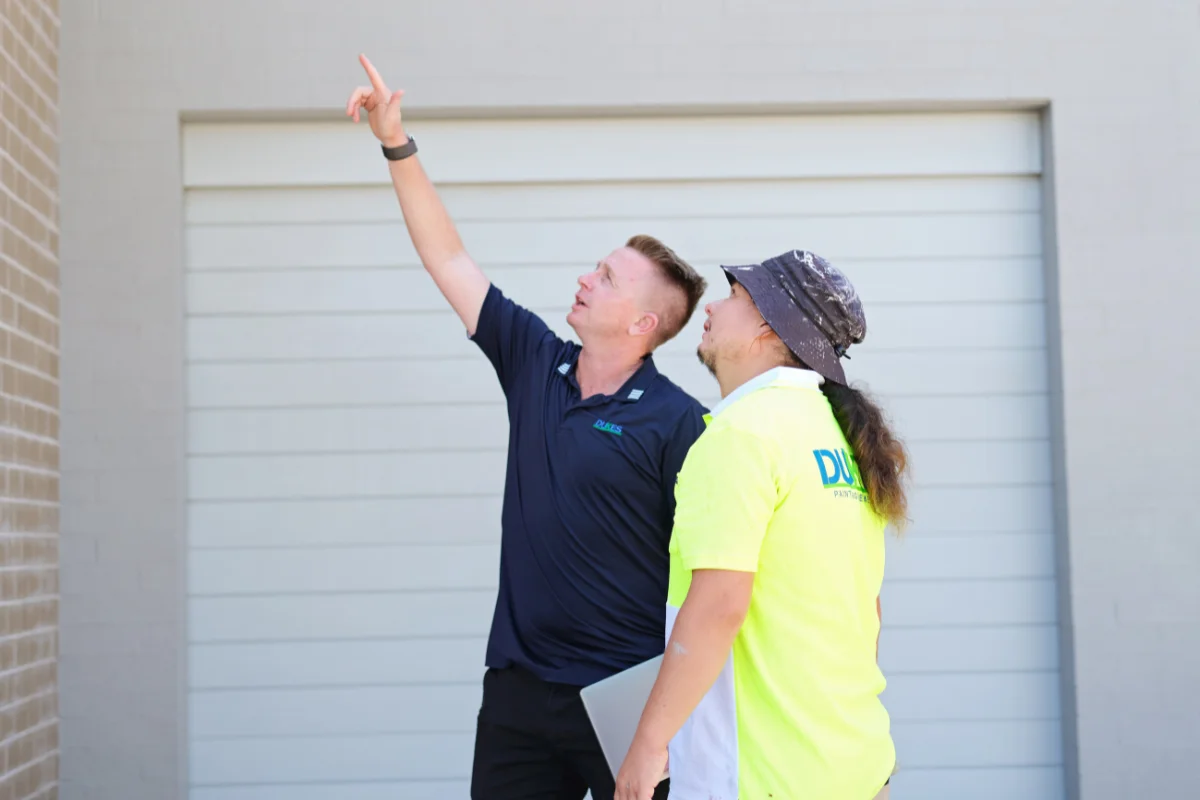
Why safety must drive quoting and planning decisions
“Work safe, work smart” is a core value that informs everything we do at Dukes, particularly when it comes to access decisions. That’s why protection is the primary driver of all quoting and planning considerations. The occupants of the building and our team are depending on it, and it always comes first.
Adaptability is just as important. If site conditions change or early assumptions prove inaccurate, the access method will be adjusted to a safer option, regardless of cost. Safety isn’t negotiable and is foundational to how we deliver quality outcomes. Because we own scaffolding, rope access and EWPs in-house, we can make these calls quickly and confidently without compromising safety or disrupting the job.
“Work safe, work smart” is a core value that informs everything we do at Dukes, particularly when it comes to access decisions.”
Documentation and communication
Access decisions don’t just sit in quotes or early discussions; they’re carried through the job in a clear and practical way. Every project involving access is supported by a documented access plan. This typically includes marked-up drawings or annotated site photographs showing access locations, systems and staging.
Our comprehensive pre-start process includes:
- SWMS review and sign-off
- Pre-start checklists
- Verification of competencies, licences, tickets, and qualifications
- Site-specific risk controls
We don’t keep the plan internal. It’s shared with the client and building occupants so they understand how the site will be accessed and how movement will be managed during the works.
The risks of poor access planning and how we avoid them
Poor access planning creates problems quickly. It increases the risk of injury, disrupts occupants who still need to use the building, and slows work down once crews are on site. Inefficient access often leads to delays, rework and avoidable cost increases, all of which put pressure on the project and compromise the outcome. These issues don’t just affect the schedule; they affect trust, safety and the overall quality of delivery.
How do we avoid this? At Dukes, it comes down to early, meticulous planning backed by experienced in-house capability across all access types. Clear communication from estimation through to site execution keeps decisions aligned and reduces risk. That consistency is what allows projects to run safely, efficiently and with proper control.
Talk to the experts in safe commercial painting
Access planning isn’t just a technical exercise. It’s a responsibility we take seriously. The decisions made at the very beginning set the conditions for how people work, move and stay protected throughout a project. Getting it right creates confidence long before the first repair is made or the first coat goes on.
At Dukes, we have a zero-compromise safety culture. Our WHS framework is independently audited by Compliance OHS, which offers confidence that decisions are tested against current legislative and industry standards, not individual judgment.
To learn more about our safe access methods or request a quote for your next commercial painting project, contact our team.
By Paul Williams
General Manager
“Safety isn’t negotiable and is foundational to how we deliver quality outcomes.”
Key takeaways

Safe access planning needs to happen early (during estimation)
Access planning starts before the project is awarded, because you can’t quote accurately without knowing how the site will be accessed safely and efficiently.
The best access method is chosen task-by-task (not one size fits all)
Dukes selects the safest option based on the scope of works, building constraints, and the best balance of safety and efficiency for the project.
Safety drives decisions — even if conditions change
If assumptions are wrong or site conditions change, the access method is adjusted to a safer option, because safety is non-negotiable.
Clear documentation + communication reduces risk and disruption
Access planning is supported with a documented access plan, pre-start processes, and communication with clients and occupants.
Frequent Asked Questions
Why is safe access planning important before commercial painting or remedial work starts?
Safe access planning is critical because it impacts worker safety, efficiency, cost control, and project success—and many issues can be avoided by planning properly before crews arrive onsite.
When does access planning begin for a project?
Access planning starts during the estimation phase, so the quote and methodology reflect the safest and most accurate approach before the job is awarded.
How is the safest access method chosen?
The access method is selected task by task, considering:
- The scope of works (high-risk/heavy tasks vs lighter works)
- Building height and structure constraints
- Safety vs efficiency where multiple compliant options exist
What documentation is included in an access plan?
Access planning is supported with documentation such as:
- Marked-up drawings or annotated site photos
- SWMS review and sign-off
- Pre-start checklists
- Licence/ticket/competency verification
- Site-specific risk controls
What problems can happen if access planning is poor?
Poor access planning can lead to:
- Higher injury risk
- Delays and inefficient workflow
- Disruption to occupants
- Rework and avoidable cost increases
- Reduced trust and compromised quality outcomes
Recent projects


Recent projects


© Copyright Dukes Painting Services Pty Ltd. Website by Brilliant Digital